

Digital marketing is a constantly evolving field, influenced by technological innovations and changes in consumer behavior. In 2024, businesses will need to stay at the forefront to maintain a competitive advantage. This article explores the main digital trends to follow in order to optimize your digital marketing strategies. Whether it is artificial intelligence, video content, or influencer marketing, these trends will shape the digital landscape for years to come.
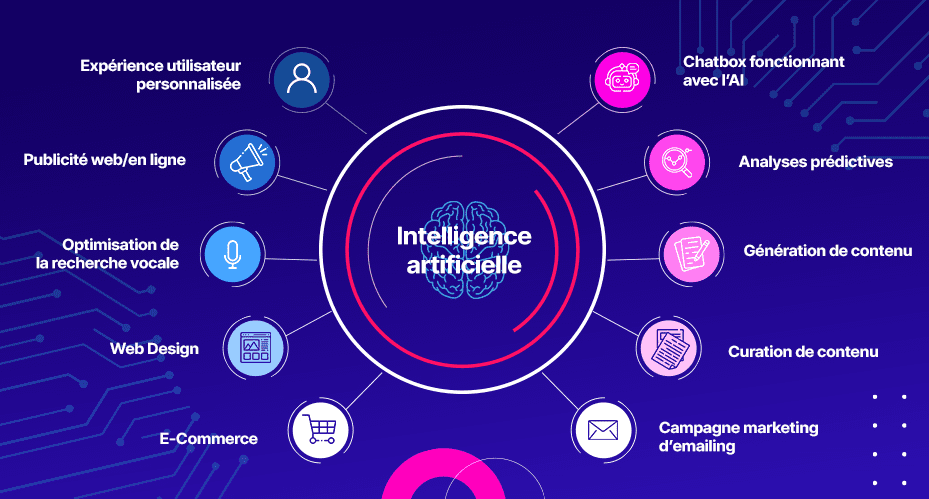
Artificial intelligence (AI) is already transforming many aspects of digital marketing, and this trend will only continue to grow in 2024. With AI, businesses can analyze vast amounts of customer data to deliver more personalized experiences. AI also enables the automation of many marketing tasks, such as managing advertising campaigns, creating content, and analyzing performance.
The most advanced AI tools are capable of predicting consumer behavior in real time, allowing marketers to adjust their strategies instantly. In addition, chatbots—now essential in customer service—will continue to evolve to deliver more natural and personalized interactions. In 2024, AI-powered chatbots will become even smarter, providing immediate customer support 24/7.
AI will also play a key role in improving programmatic advertising by automatically optimizing ads to reach the right audiences at the right time, while reducing advertising costs.
Video content now plays a central role in any digital marketing strategy, and this trend will only continue to grow in 2024. Consumers, especially younger generations, increasingly prefer to consume short and engaging visual content. Platforms such as TikTok, Instagram Reels, and YouTube Shorts, which prioritize short-form videos, are experiencing rapid growth and offer brands a unique opportunity to reach new audiences.
In 2024, video content will not be limited to traditional formats. Brands will invest in live videos, webinars, and interactive content to maintain user engagement. “Live streaming” not only allows real-time interaction with the audience but also creates a sense of urgency that encourages immediate action (purchase, sign-up, etc.).
To maximize the impact of video content, SEO optimization will play a crucial role. Brands will need to ensure their videos are well-structured with optimized titles, descriptions, and tags for search engines in order to improve visibility.

Influencer marketing continues to grow in importance in digital marketing strategies, but in 2024 it will take on a new form. The era when major social media celebrities dominated the landscape is changing. Brands are now turning to micro-influencers, and even nano-influencers, to reach more targeted and highly engaged audiences.
Micro-influencers are perceived as more authentic and closer to their communities, making them ideal marketing partners. In 2024, collaborations based on authenticity will be more valued than ever. Consumers are looking for genuine recommendations rather than overly commercial advertisements.
To succeed in this new era of influencer marketing, it will be essential for brands to partner with influencers who share their values and can genuinely engage their audiences with high-quality content. Authenticity and alignment with brand values will be the keys to success.
Environmental awareness continues to grow among consumers, and in 2024 this trend will strengthen even further. Companies that adopt sustainable practices and communicate transparently about their sustainability efforts will benefit from a stronger brand image and increased customer loyalty.
For businesses, integrating sustainability into their digital marketing strategies is no longer optional, but a necessity. Consumers are increasingly attentive to the environmental impact of the products they purchase. They expect brands to take a stand on environmental and social issues.
Highlighting your environmental initiatives, whether through marketing campaigns or collaborations with committed influencers, can help strengthen your brand image. Adherence to sustainable practices will be a key decision factor for many consumers in 2024.


In 2024, omnichannel marketing will continue to grow in importance. The goal is to provide a seamless customer experience regardless of the channel used (online, in-store, mobile, etc.). Consumers now move across multiple platforms and expect their journey to be consistent.
Omnichannel marketing involves integrating multiple channels in a harmonious way to create a frictionless user experience. This requires careful collection and analysis of customer data to understand their preferences and adjust marketing campaigns accordingly.
Companies that successfully integrate their various communication and sales channels will be able to significantly improve customer satisfaction and loyalty.
Social commerce, or social commerce, is rapidly expanding and will continue to grow in 2024. This concept involves selling directly on social platforms such as Instagram, Facebook, and TikTok. These platforms are becoming not only spaces for social interaction but also sales channels.
The advantage of social commerce is that it allows businesses to reach consumers where they already spend most of their time. Users can purchase products directly from a post or story without leaving the app. This reduces friction in the buying process and increases conversion chances.
However, brands will need to adapt their content and offers according to the specifics of each platform. The success of social commerce will largely depend on the ability to create smooth and engaging shopping experiences.
Programmatic advertising, which uses algorithms to automatically buy and sell advertising space, will continue to improve in 2024. Thanks to artificial intelligence, it is becoming increasingly precise and helps optimize advertising costs by better targeting audiences.
In 2024, programmatic advertising will no longer be limited to purchasing ad space; it will also be used to personalize advertising messages in real time. Retargeting, which involves targeting users who have already shown interest in a product, will be greatly facilitated by these technologies.
Companies that adopt programmatic advertising will benefit from more efficient management of their advertising budgets, ensuring that every euro spent is optimized to reach the right audience at the right time.
Data-driven digital marketing will be an essential trend in 2024. Analyzing customer data helps better understand consumer behavior and adapt marketing campaigns accordingly. Companies that master the use of data will have a significant competitive advantage.
One of the main trends in data-driven marketing will be the use of real-time data. Businesses will be able to adjust their marketing strategies based on user behavior and interactions in real time, increasing campaign effectiveness.
In 2024, data collection and analysis tools will continue to evolve, providing marketers with deeper insights to make strategic decisions. It will be essential to use marketing analytics platforms to fully leverage this data.
Data privacy and the protection of personal information will continue to be major concerns for both consumers and regulators in 2024. Businesses will need to ensure compliance with existing regulations, such as the GDPR (General Data Protection Regulation) in Europe or the CCPA in California.
Consumers are increasingly concerned about how their personal data is collected, stored, and used. Brands that implement transparent privacy policies and provide clear options for data management will have a competitive advantage.
In 2024, businesses will need to strike a balance between using data to personalize customer experiences and respecting user privacy. Trust will be a key factor in retaining customers.
With the rise of voice assistants such as Alexa, Siri, and Google Assistant, voice-based marketing will be another major trend to watch in 2024. Voice searches represent a growing share of web searches, and businesses will need to adapt their SEO strategies to take advantage of this trend.
Voice marketing involves optimizing content and campaigns for voice-based queries. This includes using more natural and conversational phrases, different from those typed into a traditional search engine.
Voice assistants also offer opportunities for commerce. For example, users can order products simply by speaking to their voice assistant. In 2024, brands will need to ensure that their products and services are easily accessible through these interfaces.
User experience (UX) is one of the most important aspects of digital marketing. A smooth and intuitive interface can make all the difference between a successful conversion and a lost customer. In 2024, UX will continue to play a crucial role in the design of websites and applications.
Businesses will need to ensure that their digital platforms provide a pleasant and frictionless user experience. This includes fast loading times, easy navigation, and perfect mobile compatibility.
UX is not limited to the appearance of a website. It also includes how users interact with the content and how easily they can perform actions (buying a product, signing up for a newsletter, etc.). Good UX is often rewarded with better rankings in search engine results, making it an essential factor for any SEO strategy.
Social media will remain a key element of digital marketing in 2024, but the way brands interact with their audiences will continue to evolve. The algorithms of social platforms such as Facebook, Instagram, and TikTok are becoming increasingly sophisticated and require well-thought-out strategies to maximize reach and engagement.
To succeed on social media, it is no longer enough to publish content randomly. Brands must create a solid editorial calendar, adjust their posts according to peak times, and leverage analytics tools to refine their strategies. Ephemeral content, such as stories, will continue to play a major role, especially in creating a sense of urgency and exclusivity.
Social media optimization also includes using engaging formats such as short videos, interactive polls, and partnerships with influencers. The key to success will lie in the ability to adapt to user preferences and maintain authentic communication.

MonDesign Web, your digital marketing agency, dedicated to guiding you to the pinnacle of your online success.



We use cookies to improve your experience on our site. By using our site, you consent to cookies.
Websites store cookies to enhance functionality and personalise your experience. You can manage your preferences, but blocking some cookies may impact site performance and services.
Essential cookies enable basic functions and are necessary for the proper function of the website.
These cookies are needed for adding comments on this website.
Statistics cookies collect information anonymously. This information helps us understand how visitors use our website.
Google Analytics is a powerful tool that tracks and analyzes website traffic for informed marketing decisions.
Service URL: policies.google.com
Marketing cookies are used to follow visitors to websites. The intention is to show ads that are relevant and engaging to the individual user.
Facebook Pixel is a web analytics service that tracks and reports website traffic.
Service URL: www.facebook.com
 #!trpst#trp-gettext data-trpgettextoriginal=1947#!trpen#Optimized by #!trpst#trp-gettext data-trpgettextoriginal=1946#!trpen#Seraphinite Accelerator#!trpst#/trp-gettext#!trpen##!trpst#/trp-gettext#!trpen#