
Do you want your website to reach new heights in search results? Then you need a thorough SEO audit and SEO optimization .
A complete SEO audit will evaluate the technical and content aspects of your website, identifying opportunities for improvement. It will examine keywords, site structure, loading speed, meta descriptions, and much more. Thanks to this audit, you will be able to target your site’s weaknesses and turn them into strengths to achieve a better ranking in search engines.
Once the audit is complete, you can proceed with SEO optimization. This involves optimizing your content for relevant keywords, building high-quality links, improving user experience, and many other techniques that will make your website more visible to search engines.
Don’t let your website get lost in the depths of the Internet. Audit and SEO optimization will help propel your website to the top of search results, attracting more qualified traffic and generating more conversions. Don’t miss this opportunity to maximize your online presence.
A SEO audit is a comprehensive evaluation process that analyzes the technical and content aspects of a website to identify opportunities for improvement. The main objective of this audit is to pinpoint the site’s weaknesses and turn them into strengths in order to improve its ranking in search engines. The audit covers several crucial elements, such as keywords, site structure, loading speed, meta tags, and much more.
Conducting an SEO audit is an essential step before undertaking any SEO optimization. It helps you understand how search engines perceive your site, uncover issues that could harm its ranking, and highlight opportunities for improvement. A well-executed audit gives you a clear view of your site’s current state and serves as the foundation for an effective SEO strategy. 🚀
An SEO audit can be conducted using various tools and techniques. For example, tools like Google Search Console, Ahrefs, and SEMrush are often used to analyze SEO performance. These tools provide valuable data on how your site is indexed, the keywords it ranks for, potential security issues, and much more.
In short, an SEO audit is a crucial step for any website owner who wants to improve their online visibility. It provides a clear roadmap to optimize the site and maximize its ranking potential in search results.
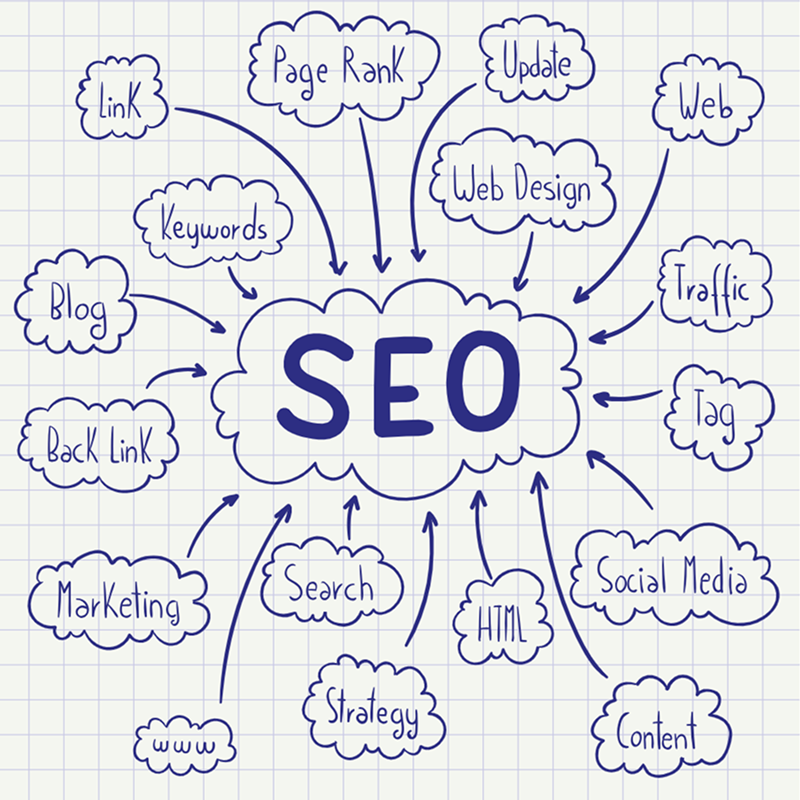
SEO audits and optimization are essential for pushing your website to the top of search results. These processes offer several key benefits that can transform your site's performance.
A SEO audit identifies the elements of your website that can be improved for better online visibility. For example, by optimizing meta tags, fixing technical errors, and enhancing content, you increase the chances of your site appearing at the top of search results. Greater visibility means your site will be more easily found by users, which is crucial for attracting organic traffic.
Your domain authority also plays an important role in your site’s ranking. Search engines, like Google, favor sites considered as reliable sources of information. A SEO audit can help strengthen this authority by identifying link-building opportunities, fixing content errors, and ensuring your site follows SEO best practices.
SEO optimization is not just about attracting any traffic, but about attracting qualified traffic. This means visitors who are genuinely interested in the products or services you offer. A SEO audit helps identify the most relevant keywords for your niche, and optimizing these keywords in your content allows you to target a more relevant audience.
For example, by using long-tail keywords, which are often more specific and less competitive, you can attract visitors who are further along in their decision-making process and therefore more likely to convert. By optimizing your content for these keywords, you improve not only the quantity but also the quality of the traffic coming to your site.
A well-optimized website provides a better user experience, which can lead to increased conversions. Conversions can take various forms: purchases, newsletter sign-ups, contact form submissions, etc. By identifying and addressing conversion obstacles during a SEO audit, you enhance the smoothness of the user journey.
SEO optimization also makes your website more attractive to both search engines and users. Elements such as site speed, intuitive navigation, and relevant, engaging content are essential to maintain visitors’ interest and encourage them to take action.
In summary, SEO audits and optimization are essential for improving your website’s visibility, attracting qualified traffic, and maximizing conversions. These processes not only help you stay competitive in an increasingly crowded online market but also allow you to make the most of your digital marketing efforts.
An effective SEO audit is divided into several key steps that allow you to assess different aspects of your website. Each of these steps is crucial for identifying your site’s weaknesses and developing a suitable optimization strategy.
Keyword analysis is a crucial step in a SEO audit. It involves identifying the most relevant keywords for your business and evaluating their traffic potential. Thorough keyword research allows you to target the right search terms and optimize your content accordingly.
To carry out this analysis, specialized tools such as Google Keyword Planner, Ahrefs, and Moz Keyword Explorer are often used. These tools help you identify keywords with high search volume and manageable competition, while remaining relevant to your target audience. Once the relevant keywords are identified, they can be strategically integrated into your content, titles, meta descriptions, and header tags to improve your website’s visibility in search results.

The analysis of website structure and information architecture is another important step in an SEO audit. It involves evaluating how your website is organized and ensuring that search engines can easily navigate and index your pages.
A well-structured website improves the user experience and makes navigation easier for visitors. It also contributes to the efficient indexing of pages by search engines. During this analysis, it is important to check whether all your pages are accessible via internal links, whether the URLs are user-friendly, and whether important pages are properly highlighted. A well-structured site is not only easier for users to navigate but is also more likely to rank well in search engines.
Evaluating content quality and user experience is a fundamental step in an SEO audit. It involves assessing the relevance and quality of your website’s content, as well as the user experience it provides.
High-quality content is essential for attracting and retaining visitors on your website. It should be informative, well-structured, easy to read, and address users’ needs. It is also important to avoid duplicate content, which can harm your ranking in search engines.
Regarding user experience, your website should be user-friendly, easy to navigate, and fast-loading. Visitors should be able to quickly find the information they are looking for and easily access different sections of your site. A good user experience not only improves visitor satisfaction but also contributes to better search engine rankings.
Meta tags and header tags play a crucial role in a website’s SEO optimization. They not only help structure content for users but also signal to search engines the importance of different sections of your pages.
Meta tags, such as meta descriptions and meta titles, are HTML elements that provide information about a web page’s content to search engines and users. Although these tags are not directly used in search engine rankings, they strongly influence the click-through rate (CTR) on search results.
A well-written meta description is concise, persuasive, and includes relevant keywords. It should encourage users to click on your link instead of your competitors’. For example, if your page covers SEO optimization, your meta description could include a sentence like: “Discover the best SEO optimization practices to improve your site’s ranking and attract more qualified visitors.”
Similarly, the meta title should be catchy and include the page’s main keywords. It must be clear and precise while accurately reflecting the page’s content. An optimized meta title could look like: “SEO Audit: Analyze and Optimize Your Site for Higher Ranking.” This type of title grabs attention while clearly indicating the page’s purpose.

Header tags, such as H1, H2, H3, etc., are used to structure the content of your web page. They help to organize information, making the content more accessible both to users and search engines. Each header tag indicates decreasing importance, with H1 being the main title of the page and the other tags used to structure subsections.
Proper use of header tags is essential for SEO. For example, each page should have a single H1 tag representing the main topic of the page. H2 tags are used to divide the content into main sections, and H3 tags for subsections. This structure not only makes reading easier for users but also helps search engines understand the page’s content.
Well-structured content with optimized header tags not only improves the user experience but also enhances search engine indexing, thereby increasing your chances of ranking well for targeted keywords.
Website loading speed is a crucial factor not only for SEO but also for user experience. A slow site can frustrate visitors and cause them to leave your page before it fully loads, increasing the bounce rate and negatively impacting your search engine ranking.
Search engines, especially Google, consider a site's loading speed when evaluating its ranking. A fast site is often ranked higher than a slow one because it provides a better user experience. Visitors are more likely to stay on a quickly loading site, which reduces the bounce rate and increases time on page—two factors that can positively influence SEO.
Moreover, a fast website is also crucial for conversions. Users are more likely to take action (such as making a purchase or signing up) on a quickly loading site. Studies show that each second of delay in loading time can lead to a significant drop in conversions.
To improve your website’s loading speed, several techniques can be implemented. First, it is essential to compress images without compromising their quality. Images often make up the largest portion of a page’s size, so optimizing them can significantly reduce loading time.
Next, it is recommended to minify CSS, JavaScript, and HTML files. This means removing unnecessary spaces, comments, and non-essential characters to reduce file sizes and speed up their loading.
Using caching is another effective technique. Caching stores a static version of your site, allowing it to load faster for returning users.
Finally, hosting also plays a crucial role. Good hosting, with fast and reliable servers, can greatly improve your website’s loading speed.

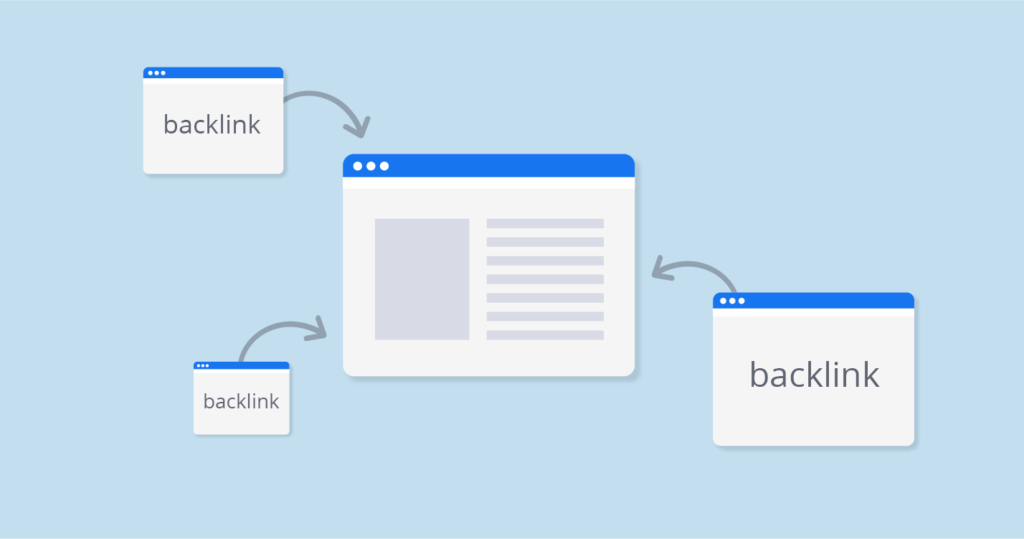
Inbound links, also called backlinks, are essential for strengthening your website’s domain authority and improving its ranking in search engines. Search engines view backlinks as votes of confidence, and the more high-quality links your site receives, the higher its chances of ranking at the top of search results.
Backlinks are one of the most important factors for SEO optimization. A backlink is a link from another website pointing to yours. Search engines interpret these links as a sign that your content is relevant and useful, which can improve your ranking.
However, not all backlinks are equal. Backlinks from reputable sites with high authority are far more beneficial for your SEO than those from lower-quality sites. A link from a government website, for example, carries more weight than a link from a personal blog.
Although backlinks are essential, it is important to avoid practices that could lead to penalties from search engines. For example, buying links or participating in link networks is a practice that can result in a severe Google penalty.
It is also crucial to regularly monitor your backlink profile to identify toxic links, that is, links coming from low-quality or spammy sites. Tools like Google Search Console or Ahrefs can help you track these links. If you identify toxic links, you can disavow them using Google’s disavow tool to prevent them from negatively affecting your SEO.
In conclusion, a comprehensive SEO audit followed by a well-planned optimization is essential to propel your website to the top of search results. The SEO audit identifies weaknesses and opportunities for improvement, providing an overview of your site's current performance. Through this analysis, you can implement an effective SEO optimization strategy that will increase your site's visibility, attract qualified traffic, and improve your conversion rates.
It is important to note that SEO is not a one-time process, but an ongoing one. Search engines regularly update their algorithms, and your competitors are constantly striving to improve their own rankings. To remain competitive, it is crucial to conduct regular SEO audits and adjust your optimization strategy based on the results obtained.
By investing in a comprehensive SEO audit and continuous optimization, you maximize your online presence, attract more qualified visitors, and increase conversions. This not only allows you to stay ahead of the competition but also to fully leverage the potential of your website in an ever-evolving digital environment.

MonDesign Web, your digital marketing agency, dedicated to guiding you to the pinnacle of your online success.



We use cookies to improve your experience on our site. By using our site, you consent to cookies.
Websites store cookies to enhance functionality and personalise your experience. You can manage your preferences, but blocking some cookies may impact site performance and services.
Essential cookies enable basic functions and are necessary for the proper function of the website.
These cookies are needed for adding comments on this website.
Statistics cookies collect information anonymously. This information helps us understand how visitors use our website.
Google Analytics is a powerful tool that tracks and analyzes website traffic for informed marketing decisions.
Service URL: policies.google.com
Marketing cookies are used to follow visitors to websites. The intention is to show ads that are relevant and engaging to the individual user.
Facebook Pixel is a web analytics service that tracks and reports website traffic.
Service URL: www.facebook.com